The Irish Republican Brotherhood
Click Here For The Best Deals On Amazon

Irishrepublicanbrotherhood.ie.
Irishrepublicanbrotherhood.com
Irish Republican Brotherhood Official Newspaper Below Link
GMAIL LogIn Link Best Free Email Available
Google Search Link Twitter X LogIn Facebook
YahooMail LogIn Link EuroNews Link
INL News Media World Wide Email LogIn Link
GoDaddy Secure Account Log In Link
New York Times World News LogIn Link
INL News Media Group Sponsored Website LogIn Link
AOLMAIL LogIn Link RTE Player LonIn
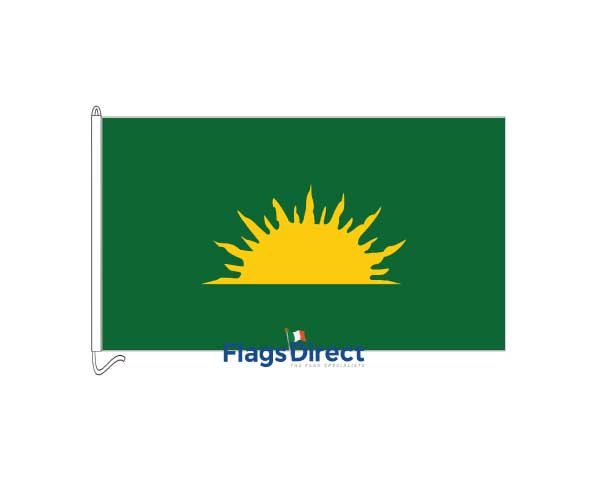
Irish Republican Brotherhood
Honouring the past ... Shaping the future.. Join the Irish Republican Brotherhood in pursuit of Freedom for all Irish People living in Ireland or who may return to Ireland after as result of the many adversities they had to face living in Ireand that gave then no choice at the time to sail away to distant shores.. so they can return to an Ireland that is completely free from outside control. An Irish run by the Irish People for the Irish People..

https://www.Irishrepublicanbrotherhood.ie.
Anyone interested in becoming a member of the Irish Republican Brotherhood, or want to offer moral or financial support to the aims of the Irish Republican please email:
This email address is being protected from spambots. You need JavaScript enabled to view it.
https://youtu.be/CU3jSD1isbs?
WebArchiveLink for Irishrepublicanbrotherhood.ie
Irish Republican Brotherhood
Introduction letter from Tomas O’Riain the President fo the Irish Brotherhood IRB
All of those IRB inspired movements resulted in the 1916 Rebellion and its aims so wonderfully expressed in the 1916 Proclamation. This was followed by the 1918 general election and the establishment of Dáil Éireann a parliament for all Ireland and by the War of Independence. The British couldn’t win so they sued for a truce which in turn led to representatives of Dáil Éireann engaging in ‘settlement’ talks with the British Government.
The final outcome was a British enforced settlement under Lloyd George Britain’s PM’s threat of waging ‘Immediate and terrible war’ on the Irish people.
An imposed divided country was the result with a six county apartheid British Statelet in the north and a Twenty-Six County British Dominion “Free State” in the south with a British created parliament and a British imposed constitution.
This led to a civil war which was really a British inspired counter revolution with British money, guns and even the ship that bombarded Dublin in 1916. They defeated the republicans and left us with what we have today, two failed corrupt disintegrating states.
Today’s Twenty-Six County state is rapidly choking in its own corruption and mismanagement. The Leinster House politicians capitulated to the demands of the corrupt bankers and bailed out their failed gambling orgy with the people’s money and resources.
The British created CORRUPT judicial system, at the behest of the thieving banks is busy destroying the fabric of Irish society by unlawfully ejecting people from their homes in their tens of thousands.
The parasitic politicians do nothing but pass more and more repressive legislation to wring every last hard earned penny out of the people’s pockets. They exercise power without responsibility. That cannot be allowed to continue. It breeds oppressive totalitarian corruption.
The resurgent IRB must unite the people into a peaceful but powerful mass movement and reclaim the country north and south from the corrupt onslaught of bankers, politicians, the judiciary and their supporting medias spin and propaganda merchants.
We must build the IRB into a powerful united people’s movement to turn the tide and reclaim Ireland for this and the future generations of her noble and ancient people. The GAA has a million members and so can we.
In response to this great need the Irish Republican Brotherhood is reorganising and opening new branches or Circles throughout Ireland and amongst the Irish Diaspora. Membership is open to all Irish people over the age of 16.
Tomas O’Riain IRB President
Éireann go Brách - Ireland Forever.
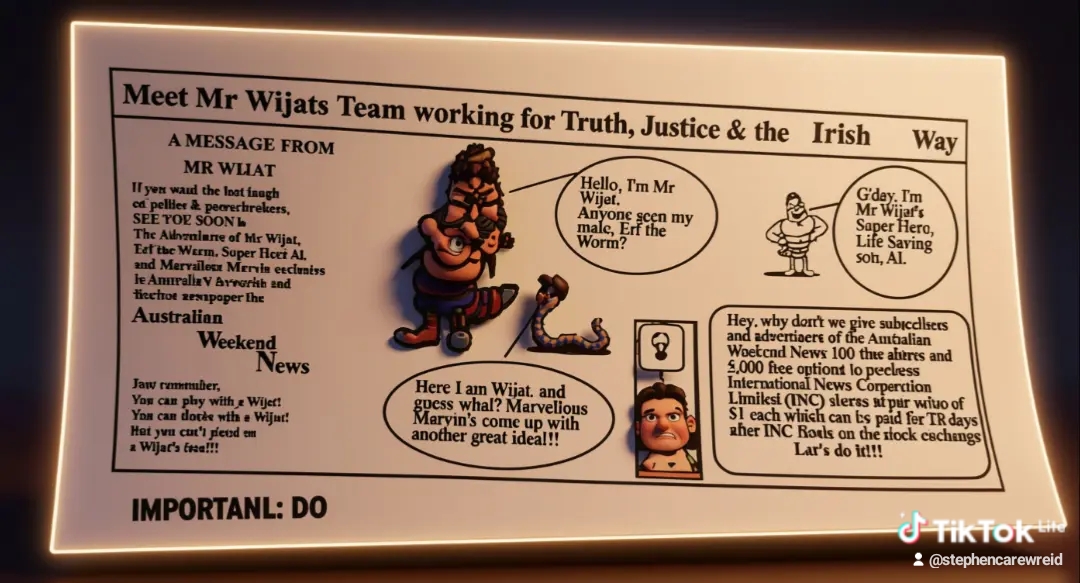
Mr Wijat and His Team Fighting for Truth ,Justice, the Irish Way and For A True Independent Irish Republic
A short message from Mr Wijat.
.".. I look forward to seeing you reading my favourite Irish Newspaper
The Irish People
JUST Remember . ....
You Can Play With A Wijat .....
You Can Dance With A Wijat ......
But You Can't Stand On A Wijat's Toes !!! "
BBC - History - 1916 Easter Rising - Profiles - The Irish Republican Brotherhood
Irish Republican Brotherhood (IRB)
The Irish Republican Brotherhood (IRB) was a small, secret, revolutionary body (known as the Fenian movement in the 1850s and 60s), committed to the use of force to establish an independent Irish republic. After organising an abortive rising in March 1867, it suffered deep internal divisions over leadership and strategy – whether it was best to strike at England in Ireland or in Canada. The issue was resolved after a series of failed interventions in Canada in 1866, 67 and 71. The IRB’s reorganisation was begun after the release from prison in 1871 of two of its most effective leaders - Jeremiah O`Donovan Rossa and John Devoy. Its constitution was amended in 1873; it was thereafter to be governed by a partially elected, eleven-man Supreme Council, representative of its seven British and Irish electoral divisions; members swore to regard this Council as ‘the Government of the Irish Republic.
With no immediate prospect of effective revolutionary action, the IRB leaders agreed to co-operate with the Irish Parliamentary Party, then under Parnell’s dynamic leadership, in mobilising tenant agitation for land reform (known as the ‘new departure’, 1879-82). They hoped to weaken British authority and to generate increased popular support for the republican cause. Meanwhile, during the 1880s, the Brotherhood organised a dynamite campaign in English cities.
Riven by continuing internal squabbles, the IRB was unable to exploit the weakness and divisions in the constitutional movement following Parnell’s divorce scandal, 1890-91. It was eventually rejuvenated, between 1910-12. The key figure in purging its aging leadership was Thomas Clarke, himself a veteran republican. Supported by a new generation of young, committed members he succeeded in bringing a new sense of purpose and vitality to the organisation, so that it was able to exploit any favourable opportunities for insurrection when they arose. In 1913, a group within the IRB encouraged the formation of the Irish Volunteer Force (IVF). After the force split (September 1914), these elements (including Clarke) successfully infiltrated the dissident IVF rump which had rejected Redmond’s appeal to enlist in the British Army. They hoped to use these Volunteers in an insurrection, which they considered opportune, given the outbreak of war in Europe. The Easter Rising was planned by the seven-man IRB Military Council - a body set up on Clarke’s initiative (May 1915), whose activities were concealed even from the IRB Supreme Council.
Many republicans blamed the secretiveness of the IRB for the confusion surrounding the Rising and for its failure. After World War One, they argued that it had served its purpose and was no longer needed, and that the Dail government - established January 1919 - should control and direct the Irish Republican Army (IRA). The revival of the IRB after 1916 and its considerable influence within both the Dail and the IRA during the Anglo- Irish war (1919-21), was chiefly because Michael Collins, the IRB President and Dail Minister of Finance, still valued it. He considered that it had a vital role to play, especially in gathering intelligence and he resisted the efforts of other Sinn Féin politicians to gain control of the IRA’s military campaign. The IRB divided over the Treaty (December 1921) - most rank and file members opposed it - and the organisation did not survive the impact of the Irish Civil War and formation of the Irish Free State.

John Devoy ©
The Irish Republican Brotherhood (IRB)
The Irish Republican Brotherhood (IRB) was a small, secret, revolutionary body (known as the Fenian movement in the 1850s and 60s), committed to the use of force to establish an independent Irish republic. After organising an abortive rising in March 1867, it suffered deep internal divisions over leadership and strategy – whether it was best to strike at England in Ireland or in Canada. The issue was resolved after a series of failed interventions in Canada in 1866, 67 and 71. The IRB’s reorganisation was begun after the release from prison in 1871 of two of its most effective leaders - Jeremiah O`Donovan Rossa and John Devoy. Its constitution was amended in 1873; it was thereafter to be governed by a partially elected, eleven-man Supreme Council, representative of its seven British and Irish electoral divisions; members swore to regard this Council as ‘the Government of the Irish Republic’.
John Devoy
With no immediate prospect of effective revolutionary action, the IRB leaders agreed to co-operate with the Irish Parliamentary Party, then under Parnell’s dynamic leadership, in mobilising tenant agitation for land reform (known as the ‘new departure’, 1879-82). They hoped to weaken British authority and to generate increased popular support for the republican cause. Meanwhile, during the 1880s, the Brotherhood organised a dynamite campaign in English cities.
Riven by continuing internal squabbles, the IRB was unable to exploit the weakness and divisions in the constitutional movement following Parnell’s divorce scandal, 1890-91. It was eventually rejuvenated, between 1910-12. The key figure in purging its aging leadership was Thomas Clarke, himself a veteran republican. Supported by a new generation of young, committed members he succeeded in bringing a new sense of purpose and vitality to the organisation, so that it was able to exploit any favourable opportunities for insurrection when they arose. In 1913, a group within the IRB encouraged the formation of the Irish Volunteer Force (IVF). After the force split (September 1914), these elements (including Clarke) successfully infiltrated the dissident IVF rump which had rejected Redmond’s appeal to enlist in the British Army. They hoped to use these Volunteers in an insurrection, which they considered opportune, given the outbreak of war in Europe. The Easter Rising was planned by the seven-man IRB Military Council - a body set up on Clarke’s initiative (May 1915), whose activities were concealed even from the IRB Supreme Council.
Many republicans blamed the secretiveness of the IRB for the confusion surrounding the Rising and for its failure. After World War One, they argued that it had served its purpose and was no longer needed, and that the Dail government - established January 1919 - should control and direct the Irish Republican Army (IRA). The revival of the IRB after 1916 and its considerable influence within both the Dail and the IRA during the Anglo- Irish war (1919-21), was chiefly because Michael Collins, the IRB President and Dail Minister of Finance, still valued it. He considered that it had a vital role to play, especially in gathering intelligence and he resisted the efforts of other Sinn Féin politicians to gain control of the IRA’s military campaign. The IRB divided over the Treaty (December 1921) - most rank and file members opposed it - and the organisation did not survive the impact of the Irish Civil War and formation of the Irish Free State.
The Irish Republican Brotherhood

On St Patrick’s Day 1858, in Peter Lanigan’s timber yard, Lombard Street, Dublin, James Stephens formally established the Irish Republican Brotherhood. It was originally named the Irish Revolutionary Brotherhood, but soon came to be known as the Irish Republican Brotherhood (IRB). The IRB was a small, secret, revolutionary body whose sole object was to ‘establish and maintain a free and independent Republican Government in Ireland’. Stephens was a Young Irelander, and was a lieutenant to William Smith O’Brien at the ‘Battle of Widow McCormack’s cabbage patch’ in Ballingary, Co. Tipperary, in August 1848. He was wounded three times and was smuggled onto a ship to England and then to France, where he spent the next eight years. Upon his return to Dublin in 1856, he determined to organise the revolutionary movement and that led to the founding of the IRB.It became known as the Fenian movement in the 1850s and 1860s, and was committed to the use of force to establish an independent Irish republic.
After organising an abortive rising in March 1867, it suffered deep internal divisions over its leadership and strategy in both the United States and Ireland—whether it was best to strike at England, in Ireland or in Canada. The issue was resolved after a series of failed interventions in Canada in 1866, 1867 and 1871, and after bombings in England that did not lead Ireland closer to independence. The IRB was unable to exploit the weaknesses and divisions in the constitutional movement following Parnell’s divorce scandal, 1890–1.
It was eventually rejuvenated in Ireland about 1907, led by Bulmer Hobson and Tom Clarke, thus preparing the way for all that followed.The governing body was the supreme council. Before 1916 this consisted of eleven members, and after the 1917 reorganisation it contained fifteen members. When not in session, all powers of the supreme council, except for declaring war, devolved onto an executive of three: the president, secretary and treasurer. The constitution provided for the establishment of a military council, subordinate to the supreme council. (The seven signatories of the 1916 Proclamation constituted the entire military council at that time.)Its constitution was dedicated to the use of force against England at any favourable opportunity, but this was to be a democratic decision:
‘The IRB shall await the decision of the Irish Nation as expressed by a majority of the Irish people as to the fit hour of inaugurating a war against England and shall, pending such an emergency, lend its support to every movement calculated to advance the cause of Irish independence, consistent with the preservation of its own integrity’, a clause adopted in 1873 in response to the controversies arising from the 1867 Rising.The IRB planned the 1916 Rising; the Irish Volunteers and the Irish Citizen Army made it possible.
The establishment of the Irish Volunteers gave the IRB the great opportunity to train and equip its members as a military body for the purpose of securing independence for Ireland by force of arms and securing the cooperation of all Irish military bodies in the accomplishment of its objectives.Numerically the IRB probably never exceeded 2,000 members, but they were all extremely loyal and well trained, and there was very tight security. The executions of 1916 just about wiped out the supreme council, and after the prisoners were released the IRB had to reconstitute itself. In 1917 Seán McGarry was elected president, Michael Collins secretary and Diarmuid Lynch treasurer.
According to the IRB constitution, the president, ‘in fact, as well as by right’, was regarded as the head of the government of the Irish Republic. HI
Joseph E.A. Connell is the author of Dublin in rebellion: a directory, 1913–1923 (Lilliput Press, 2006).
Further reading:O. McGee, The IRB: the Irish Republican Brotherhood from the Land League to Sinn Féin (Dublin, 2005).W. Mandle, ‘The IRB and the beginning of the Gaelic Athletic Association’, Irish Historical Studies XX (80) (1977).
Categories18th–19th - Century History, General, Irish Republican Brotherhood / Fenians, Issue 6 (Nov/Dec 2011), Reviews, Volume 19
An apology from the IRB publishers of the www..Irishrepublicanbrotherhood.ie and www.irishrepublicanbrotherhood.com websites which appear to be hacked by those that do not like the ever growing strength and support the Irish Republican Brotherhood is gaining day by day to bring true independence and freedom to the Irish People in Ireland. It is hoped the www.irishrepublicanbrotherhood.com and www Irishrepublicanbrotherhood.ie websites are back online as soon as possible.
In the meantime the
https://www.irishpeople.ie Is working ok.
All emails you want to send to the Irish Republican Brotherhood please use the following email address:
This email address is being protected from spambots. You need JavaScript enabled to view it. which are on a completely different much more secure server.
Web Archive for Introduction to The Irish Republican Brotherhood.
WebArchive for the Charter of The Republican Brotherhood
Web Archive for the Introduction of The Irish Republican Brotherhood
Web Archive for News From The Irish Republican Brotherhood IRB
Web Archive For Past Present and Future of The Irish Republican Brotherhood IRB
GMail LogIn Link. Google Search Link
YahooMail LogIn Link AOLMail LogIn Link
INL News Corp Ltd LogIn Link For Email Accounts
The INL News Media Group Suing The Irish State, Séamus McEnaney and the McEnaney Group of Family Companies, Helen McEntee, Simon Harris, Drew Harris, Dublin City Council, An Garda Síochána Commissioner and 30 other Named Defendants for Excess of 100 billion euros in High Court of Ireland Plenary Summons H.P.2025.739 John Carew-Reid as Trustee for the INL News Media Group v Republic of Ireland and 37 others
His Honour Justice Brian Cregan has ordered that H.P.2025.739 John Carew-Reid aa Trustee for the INL News Media Group v Republic of Ireland and 37 Other Named Defendants will be placed on the Expedited Trial List and will not be struck out on any legal technicality
In the Statement of Claim in H.P.2025.739 John Carew-Reid and the INL News Media Group will use the 100 plus billion euros damages due to them to solve the Lack of Affordable Housing Problem and Irish Homeless in Ireland by providing housing loans to Irish People on no deposit at one percent interest fixed rate pee year for life of thr borrower with the borrower being able pass on the 1% fixed interest rate loan to their family and children who inherit their home.
.The INL News Media Group's Investigation Team have uncovered that the USA Government owns the Irish State around 550 billion euros. So the INL News Media Group asks the 64 dollar question.. "Why Doesn't The Irish State demand that the US Government immediately repay the Irish back at least 200 billion so the Irish State can have the immediate cash to solve the lack of hospital beds in Irish Hospitals, lack of Schools in Ireland, high cost of living in Ireland due to excessive indirect taxation, lack of affordable housing and homeless problems in Dublin anf throughout the whole of Ireland
GMail LogIn Link Google Search Link
INLNews Media Group's Email LogIn Link
Yahoo Mail LogIn Link GoDaddy LogIn Link Al Jazeera Live
-
Handy Easy Email and World News Links
GMail GoogleSearch Y
ahooMail HotMail AOLMail WebMail INLTV.co.uk GMail
- news.sky.com/watch-live New York Post nypost.com YouTube
Australian News and 180 million year History Highlights
GoDaddy Secure Account Log In.
INLTV Independent and Uncensored News
Australian News and 180 million year History Highlights
GoDaddy Secure Account Log In.
 The Irish Republican Brotherhood (IRB) was originally founded by on the 17th March 1858 and was preceded by Young Ireland. The official newspaper for the IRB is The Irish People. The ideology of the IRB is Irish Republicanism and Irish Nationalism, with Irish National Affiliations with the Irish Volunteers (1913 to 1917), the Irish Republican Army (1917 to 1923( and the Irish National Army (1922-1924). The American Affiliate of the IRB is the Fenian Brotherhood (1858-1867) and Clan na Gael (2867-1924). The colours of the IRB are Green and Gold. The slogan of the IRB is Erin go bragn.
The Irish Republican Brotherhood (IRB( originated as a secret oath-bound fraternal organisation dedicated to the establishment of an "independent democratic Irish Republic in Ireland in 1858. The IRB's counterpart in the USA and Canada wax initially the Fenian Brotherhood. However, from the 1870's it was Clan na Gael.
The members of both wings of the movement are often referred to as "Fenians".
The IRB played an important role in the history of Ireland, as the Chief advocate of Irish Republicanism during the campaign for Ireland's independence from the United Kingdom,. The IRB was the successor to movements such as the United Irishmen of the 1790’s and the Young Irelanders in the 1840's.
Eire Irish Harp Symbol
As part of the New Departure of the 1870's-80's, IRB members attempted to democratise the Home Rule League and it's successor, the Parliamentary Party, as well as taking part in the Land War.
The IRB staged the Easter Rusung in 1916, which led to the establishment of the first Dail Eireann1919. The suppression of Dail Eireann precipitated the Irish War of Independence and the signing of the Anglo-Irish Treaty in 1921, which ultimately led to the establishment of the Irish Free State, which excludes the territory of Northern Ireland.
In 1798 the United Irishmen, which had initially been an open political organisation, but was suppressed by the British Establishment in Ireland. As a result the United Irishmen became a secret organisation, which rose to rebellion, seeking an end to British Rule in Ireland, and the establishment of the Irish Republic. The Rebellion was suppressed, but the principles of the United Irishmen were to have an extremely powerful influence on the course of Irish History
Following the collapse of the Rebellion, the British Prime Minister William Pitt introduced a bill to abolish the Irish Parliament and manufactured a Union between Ireland and Britain.
Opposition from the Protestant Oligarchy that controlled the Parliament was countered by the widespread and open use of bribery. The Act of Union was passed, and became law on 1st January 1801. The Catholics, who hsd Bern excluded from the Irish Parliament were promised emancipation under the Union. This promise was never kept, which caused a protracted and bitter battle struggle of civil liberties. It was not until 1929 that the British Government reluctantly conceded Catholic emancipation. Though leading to general emancipation, this process simultaneously disenfranchised the small tenants, known as 'forty shilling freeholders', who were mainly Catholics. This resulted in the Irish Catholic electorate going from 216,000 voter's to 37,000, which was a massive reduction in the number of Catholics being able to vote.
Daniel O'Connell, who had led the emancipation campaign, then attempted the same methods in his campaign, to have the Act of Union with Britain repealed. Despite the use of petitions and public meetings which attracted vast popular support, the Government thought the Union was more important than Irish public opinion.
During the 1840's the younger members of the repeal movement became impatient with O'Connell's over-cautious policies, and begun to question his intentions. Later, they were what came to be known as the Young Ireland Movement. In 1842 three of the Young Ireland leaders, Thomas Davis, Charles Gavan Duffy and John Blake Dillon, launched the Nation newspaper. In the Nation newspaper they set out to create a spirit of pride and an identity based on nationality rather than on social status or religion. Following the collapse of the Repeal Association and with the arrival of famine, the Young Irelanders broke away completely from O'Connell in 1846.

John Mitchel
The blight that destroyed the Irish Potato Harvest between 1845 and 1850 caused a massive human tragedy.
Am entire social class of small farmers and labourers were to br virtually wiped out by hunger, disease and emigration. The laissez-faire economic thinking of the government ensured that help was slow, hesitant and insufficient. Between 1845 and 1850 the population of Ireland fell by two million people, or about a third of the total population of Ireand.
Thar the people starved while livestock and grain continued to be exported, quite often under military escort, left a legacy of bitterness and resentment among the Irish survivors. The waves of emigration caused by the Potato Famjne and the years following, also ensured that such feelings were not confined to Ireland, but spread to England, the United States, Australia, and every country where Irish emigrants gathered.
Shocked by the scenes of starvation and greatly influenced by the revolutionary sweeping Europe, the Young Irelanders moved from agitation to armed rebellion in 1846. The attempted Rebellion failed after a small skirmish in Ballygary , County Tipperary, coupled with a few minor incidents elsewhere. The reasons for the failure were obvious, the people were totally despondent after three years of famine, having prompted to rise early resulted in an inadequacy of military preparations, which caused disunity among the leaders.
The government quickly rounded up many of the instigators. Those who could fled across the seas, and their followers dispersed..A flicker of revolt in 1849, led among other's, James Fintan Lalor, was equally unsuccessful.
John Mitchel, the most committed advocate of revolution!, had been arrested early in 1848, and after been found guilty of the purposely created treason-felony under the new Sedition Act, by:a carefully selected Packed Jury Panel ', for daring to publicly publish letters in his friends newspaper claiming that the English Government wax deliberately starving the Irish People by sending all the livestock and grain to England John Mitchel was also joined by other Young Irelander Leaders such as William Smith O'Brien and Thomas Francis Meagher, who both had been arrested after Ballygary. John Blake Dillon escaped to France, as did three of the younger members, James Stephens, John O'Mahony and Michael Doheny.
Founding of the IRB Irish Republican Brotherhood
After the collapse of the 1848 rebellion James Stephens and John O'Mahony went to Europe to avoid arrest. In Paris they supported themselves through teaching and translation work and planned the next stage of "The fight to overthrow British Rule on Ireland". These were to keep alive, to pursue knowledge, and to master the technique of conspiracy. At this time Paris was interwoven with a network of secret political societies. Stephens and O'Mahony became members of one of the most powerful of these secret societies and acquired the secrets of some of the ablest and "most profound masters of revolutionary science" which the 19th Century had produced, as to the means of inviting and combining people for the purposes of successful revolution.
In 1853, O'Mahony went to America and founded the Emmet Monument Association. In early 1856, Stephens began making his way back to Ireland, stopping in London. On arriving in Dublin, Stephens began what he described as his three thousand mile walk through Ireland, meeting some of those who had taken part in the 1848/49 revolutionary movements, including Philip Gray, Thomas Clarke Luby and Peter Langan. In the autumn of 1857, a messanger, Owen Considine arrived from New York with a message for Stephens from members of the Emmet Monument Association, calling on him to set up an organisation in Ireand.
Constidine also carried a private letter from O'Mahony to Stephens which was a warning as to the condition of the organization in New York, which was overseen by Luby and Stephens at the time. Both had believed that there was a strong organisation behind the letter, only later to find it was a number of loosely linked groups.
On 23rd December 1857, Stephens dispatched Joseph Dennieffe to America with his reply. It was disguised as a business letter, and dated and addressed from Paris. In his reply Stephens outlined his conditions and requirements from the organisation in America
Stephens demanded uncontrolled power and 100 pounds a month for three months. Denieffe returned on 17th March 1958 with the acceptance of Stephens terms and only 80 pounds. Denieffe also reported that there was no actual organised body of sympathiser in New York, but merely a loose knot od associates. This disturbed Stephens but he went ahead regardless and that evening, St Patrick's Day the Irish Republican Brotherhood was formed.
The original oath, with its clauses od secrecy was drawn up by Luby under Stephens direction in Stephens room in Donnelly's which was situated behind Lombard Street. Luby then swore Stephens in and Stephens did likewise.
Those present in Langan's, lathe-maker and timber merchant, 16 Lombard Street, Dublin for the first meeting apart from Stephens and Luby were Peter Langan, Charles Kickman, Joseph Dennieffe and Garrett OShawnessy. Later it would include members of the Phoenix National and Literary Society which was formed in 1856 by Jeremiah O'Donovan Roses in Skibbbereen.
Web Archive of Irishrepublicanbrotherhood.ie dated 9th May 2026
https://web.archive.org/web/20260000000000*/www.irishrepublicanbrotheehood.ie
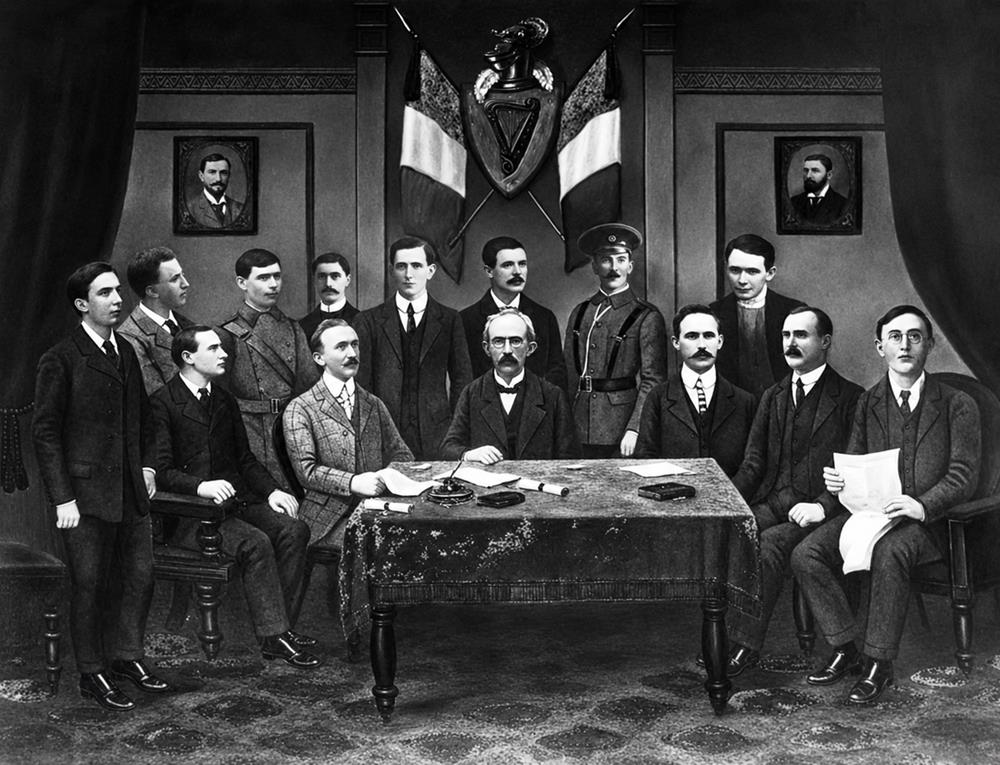
The Irish Republican Brotherhood together with the Fenians was founded simultaneously in Ireland and the United States. The Irish Republican Brotherhood is the oldest political movement in Ireand. Since its foundation in 1858, the Irish Republican is has worked to attain self-determination and create the Republic of Ireland.
The World Wide Web Addresses for The Irish Republican Brotherhood are;
https://www.irishrepublicanbrotherhood.com
E: This email address is being protected from spambots. You need JavaScript enabled to view it.
And
https://www.irishrepublicanbrotherhood.ie
E: This email address is being protected from spambots. You need JavaScript enabled to view it.
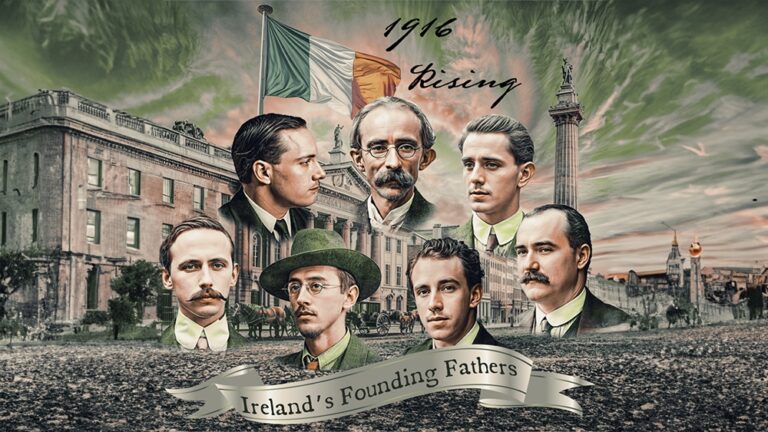
Ireland's Founding Fathers
Most of the leaders of the United Irishmen were Presbyterians and Protestants. Their aim was to achieve unity between Irish People of all religions in the cause of freedom.
This led to the 1778 Rebellion, which was ruthlessly suppressed Despite this, their Republican Spirit and it's aims have continued to inspire Irish People for more than a century and a half.
Irish Republicanism waxed and waned in the 19th Century.
It's great the Irish Republican revival started with the foundation of the Irish Republican Brotherhood (IRB) and the Fenians.
By the end of the 19th Century the Irish Republican Brotherhood IRB had successfully established itself and helped establish a number of additional organisations.
Irish Republican Brotherhood Charter
Bráithreachas Phoblacht Na hÉireann
The IRB are here to today and here to stay to lead the way
- The Irish Republican Brotherhood founded in 1858 is Ireland’s oldest, continuous and primary revolutionary organisation that led to and masterminded the 1916 Rebellion and Proclamation. Our primary aim remains the full restoration of Irish National Sovereignty as expressed declared and ratified by Dáil Éireann in 1919.
- The core aim of the Irish Republican Brotherhood continues to be the restoration of the 32 County Irish Republic democratically established in 1919 and based on republican principles that afford the Irish people true and full expression of their sovereignty.
- The re-establishment of Dáil Éireann must be actively worked towards with the actions of our parliamentary representatives being continually scrutinised and answerable to the people. This must be free from party whip constraints that facilitate the freedom of true democratic representation and accountability. The party system is an anathema to the true expression of the democratic process and the will of the people. All parties are self-serving, inward looking and parasitic in nature.
- The Irish Republican Brotherhood recognises only the true constitution ratified by the will of all the Irish people by Dail Eireann in 1919. That constitution has never been and cannot be rescinded except by all the will of undivided people of Ireland. Therefore no imposed partitionist constitution is lawfully valid on the island of Ireland.
- The right of the Irish people to national self-determination is not conditional on any ideological determination. The Irish people are sovereign and have a right to democratically choose their own sovereign expression of self-determination without any external ideology, impediment or coercion.
- It is the responsibility of the Irish Republican Brotherhood and its members to play a leading and exemplary role in the fostering of comradery and unity within the community and within the broader Republican Movement and also to ally with progressive and revolutionary organisations domestically and internationally in the advancement its republican objectives.
- It is the duty of each IRB member to conduct themselves in accordance with our republican principles and at all times to act in the spirit of comradeship towards our fellow republicans and show due respect for the Irish people.
- All claims to represent or act on behalf of the Irish Republican Brotherhood can only be expressed by currently affiliated members operating within our constitutionally acceptable parameters and with the approval of the IRB Supreme Council.
- All branch, community and local IRB activity must take place in accordance with the primary objective and aim of the Irish Republican Brotherhood and must therefore include its corresponding national dimension and objectives.
- All Irish Republican Brotherhood activity must always adhere to the IRB constitution under the Supreme Council’s civilian democratic administration and direction. Irish republicanism can only advance and make progress while maintaining the best interests of the Irish people and while safeguarding and protecting their sovereign rights.
- Irish Republican Brotherhood objectives and policies, in the absence of clearly defined strategies and active implementation and engagement are only opinions no matter how nobly held and expressed. Opinions without action waste time and energy and are of no value and must be discouraged.
- All discussions, positions, policies and IRB activities must be grounded in its fundamental and historic republican principles and not in any individual or group ideologies regardless of who they are or what they represent.
- The polarising Left and Right as well as all other dogmatic and political ideologies are banned within the IRB. Sovereignty is a right, not an ideology. Nationhood is a sovereign right of culture, identity and customs and not an ideology. The sovereignty, unity, protection, welfare, security and prosperity of the Irish people are the objectives of the Irish Republican Brotherhood.
- The Irish Republican Brotherhood works to promote indigenous Irish industry, public banking, co-operative enterprises, viable farming and innovative technology for the purpose of achieving energy independence. That includes the reclaiming of our vital water, mineral, gas, oil and sea fishery resources.
- A silver and gold or asset backed sovereign Irish currency system must be set up, supported and encouraged in parallel with the foreign system presently in place to be ready to take over when the Euro inevitably collapses.
- A fully accountable judicial system must be established under Brehon law where judges are appointed on merit rather than political patronage and where they can be impeached for wrongdoings and where lawyers are held accountable for infringements of the law and where client accounts are banned and replaced by an independent escrow account system.
- Monopolies whether they are state, corporate or professional bodies such as the legal profession must be disestablished to allow truly free enterprise to prevail and flourish. Membership of a professional body should not be required to practice ones profession providing one can demonstrate the required level of education, training and competence to fulfil their role.
- The privatisation of the nation’s assets must be reversed and compulsory purchase orders will repay what they were previously sold for. The same must apply to the fire sale of property to speculating vulture funds. Those properties can then be made available at the same rates they were acquired for to provide homes, land and businesses to the Irish people.
- All empty public housing and speculator owned housing stock must be put into a ‘Peoples Housing Bank’ for immediate redistribution to alleviate the housing and homeless crisis. Rental and purchase options can be made available based only on the purchase cost of the property. Refurbishing and maintenance Co-Ops can be established from among the schemes prospective beneficiaries to make the properties occupier ready. Priority of occupation must be given to people native to or adjacent to the locations in question.
- Because of the insidious indoctrination of the nation’s children it is imperative that we put in place a support system for parents and support home schooling and independent education initiatives. Unquantifiable and monstrous damage is being done to vulnerable and impressionable young minds to undermine the national ethos and replace it with generic compliance. Gaelscoils and all viable initiatives to combat the indoctrination of our future generations must receive our support.
- The protection, promotion and the rejuvenation of our rural communities and environment is the IRB’s vision and goal for the future. It is a vital requirement towards the achievement of a healthy, vibrant and sovereign people and nation.
- An active taskforce must be put in place to support, protect and defend people whose dwellings, lands and businesses are under threat of seizure and confiscation as a result of them being economically compromised by the unscrupulous corporate banking system and the vulture and cuckoo funds whose sole aim is a profiteering massive land and property grab.
- Peaceful activity at every level must be exerted to the fullest extent possible by all members of the Irish Republican Brotherhood for the implementation of its aims and objectives and we will support all likeminded initiatives and activities.
- Republican prisoners are regarded as our comrades. Their welfare and that of their dependents must have a special place in the activities of the IRB.
- Loyalty to leadership, individuals or factional ideologies must never be allowed to compromise loyalty to the IRB’s republican objectives as democratically and constitutionally defined.
Irish Republican Brotherhood
The Irish Republican Brotherhood together with the Fenians was founded simultaneously in Ireland and the United States. It is the oldest political movement in Ireland. Since its foundation in 1858, the Irish Republican Brotherhood has worked to attain national self-determination and create the Irish Republic.
Most of the leaders of the United Irishmen were Presbyterians and Protestants. Their aim was to achieve unity between Irish people of all religions in the cause of freedom. This led to the 1798 rebellion which was ruthlessly suppressed. Despite this their republican spirit and its aims have continued to inspire the Irish people for more than a century and a half.
Irish Republicanism waxed and waned in the 19th Century. Its great revival started with the founding of the IRB and the Fenians. By the end of the 19thcentury the IRB had successfully established and helped establish a number of additional organisations.
“At the beginning of the twentieth century Ireland was a place of political, social and cultural ferment. There was the possibility of ‘Home Rule’ – an expanded form of local government – a step forward none the less. And there were stirrings of a more profound nature amongst the people. A people ground down for centuries, robbed of their heritage, hunted, made the butt of racial jokes, pictured as sub humans in magazines like Punch, were rediscovering their pride and their identity. There was the Gaelic literary revival, the language movement, the Abbey theatre, the Gaelic Athletic Association, the labour movement, the Sinn Fein movement, behind them all the Irish Republican Brotherhood.”
John Joe O’Brien Commandant IRA. (John Joes Story)


Exciting INL News from Mr Wijat
Please email the INL News Media Group Membership Manager at
This email address is being protected from spambots. You need JavaScript enabled to view it.
by emailing the Financial Director of the INL News Media Group at
This email address is being protected from spambots. You need JavaScript enabled to view it.
INLTV Uncensored and Independent News

INL News Limited Uncensored Independent News
Irish Midlands man takes High Court action against Defence Forces complaints tribunal
Sean O'Brien a Midlands man who exposed that the Irish State has over 30 permanent MI5 Assets working as public servants in the Irish Government takes High Court action against Defence Forces complaints tribunal | Westmeath Independent
Published: Wed 21 Jan 2026
Paul Neilan
An Offaly man and former Portlaoise prison guard who alleges he was fired at with "lethal intent" while he helped to foil a 1988 escape attempt by a paramilitary prisoner, has taken a High Court challenge against a Defence Force tribunal that has refused to hear from him.
Sean O'Brien (65) of Ballycumber, Co Offaly, has taken the case against 'the Tribunal of Inquiry into issues relating to the complaints processes in the Defence Forces and the culture surrounding the making of complaints'. He lists the Minister for Defence, Ireland and the Attorney General as notice parties.
Mr O'Brien is asking the High Court to quash the tribunal's decision from April of last year, refusing him permission to make representations, as the terms of reference were limited to those employed by the Department of Defence or the Defence Forces.

Mr O'Brien submits he was a prison officer and civil servant at the prison from February 1980 to May 1989. He submits the Defence Forces had been "in control" of the prison by way of armed guard since 1973.
He claims the Defence Forces were the body responsible for the security of the prison and its occupants and that this placed him inside the terms of reference into the tribunal examining the complaints procedures.
Mr O'Brien claims he was the victim of "abuse" at the hands of the Defence Forces on the night of May 18, 1988, when he says he was "instrumental" in apprehending prisoner Patrick McVeigh who attempted to escape after a UK warrant for his extradition was issued.
He claims that shots were fired at him and the prisoner with "lethal intent" but narrowly missed them both.
Mr O'Brien says he believes his dismissal in May 1989 amounted to penalisation for reporting this and other "abuses" within the Defence Forces and that he had been precluded from participating in any inquiry that may have taken place as he was never interviewed about it.
He submits that the impact of the experience had a debilitating impact on his mental health and that he suffered PTSD and suicidal ideation.
Sean O'Brien a Midlands man who exposed that the Irish State has over 30 permanent MI5 Assets working as public servants in the Irish Government takes High Court action against Defence Forces complaints tribunal | Westmeath Independent
Midlands man takes High Court action against Defence Forces complaints tribunal
Midlands man takes High Court action against Defence Forces complaints tribunal
Paul Neilan
An Offaly man and former Portlaoise prison guard who alleges he was fired at with "lethal intent" while he helped to foil a 1988 escape attempt by a paramilitary prisoner, has taken a High Court challenge against a Defence Force tribunal that has refused to hear from him.
Sean O'Brien (65) of Ballycumber, Co Offaly, has taken the case against 'the Tribunal of Inquiry into issues relating to the complaints processes in the Defence Forces and the culture surrounding the making of complaints'. He lists the Minister for Defence, Ireland and the Attorney General as notice parties.
Mr O'Brien is asking the High Court to quash the tribunal's decision from April of last year, refusing him permission to make representations, as the terms of reference were limited to those employed by the Department of Defence or the Defence Forces.
Mr O'Brien submits he was a prison officer and civil servant at the prison from February 1980 to May 1989. He submits the Defence Forces had been "in control" of the prison by way of armed guard since 1973.
He claims the Defence Forces were the body responsible for the security of the prison and its occupants and that this placed him inside the terms of reference into the tribunal examining the complaints procedures.
Mr O'Brien claims he was the victim of "abuse" at the hands of the Defence Forces on the night of May 18, 1988, when he says he was "instrumental" in apprehending prisoner Patrick McVeigh who attempted to escape after a UK warrant for his extradition was issued.
He claims that shots were fired at him and the prisoner with "lethal intent" but narrowly missed them both.
Mr O'Brien says he believes his dismissal in May 1989 amounted to penalisation for reporting this and other "abuses" within the Defence Forces and that he had been precluded from participating in any inquiry that may have taken place as he was never interviewed about it.
He submits that the impact of the experience had a debilitating impact on his mental health and that he suffered PTSD and suicidal ideation.
At the High Court on Wednesday, January 14, Diarmuid Rossa Phelan SC, instructed by John Gerard Cullen Solicitors, for Mr O'Brien, said his client had been working under the Defence Forces at the time as they had taken control of the prison.
Mr Phelan said his client worked in the country's highest-security prison where INLA and IRA prisoners had to be separated.
Mr Phelan said the tribunal was concerned with civil servants and civilian employees at the Department of Defence and members of the Defence Forces but that this should not preclude Mr O'Brien from making representations, even though his official employer was the Department of Justice.
Counsel said his client was not seeking to "take on" the tribunal but wanted to have his voice heard regarding the handling of his abuse complaints.
Mr Phelan said his client was engaged in the service of the State at the time and acted with "commendable bravery that placed his life at risk" but those actions changed Mr O'Brien's life "from that moment".
"It [the tribunal] must inquire into the matters and processes of complaints of abuse. He [Mr O'Brien] squarely falls into this category," said counsel, who added that "not being heard was a further trauma".
Eileen Barrington SC, for the tribunal, said that Mr O'Brien's employment had been terminated due to absenteeism which began before the May 1988 incident.
Ms Barrington said it had been accepted that Mr O'Brien was an employee of the Department of Justice and had never been an employee of the Department of Defence.
Ms Barrington said the tribunal had fully considered Mr O'Brien's submissions and had given him a definitive answer.
Counsel said that to include Mr O'Brien in a Defence Forces complaints procedure investigation would "cast a very wide net" and that the tribunal had a three-year time limit.
Ms Barrington said it "couldn't be clearer" that the tribunal's obligated purpose was to look into those working at the Department of Defence or in the Defence Forces regarding a duty of care for those in their workplace.
She said the tribunal could not be extended to anyone who came across someone on the street who "gave them a box" but happens to work for the department or the military.
Ms Barrington said It was clear that the filters employed by the Tribunal were "obviously designed to capture a subset of persons" and there was no obligation to hear Mr O'Brien if he fell outside the terms of reference.
Ms Justice Miriam O'Regan reserved her judgement in the matter.
How the IRB changed Ireland
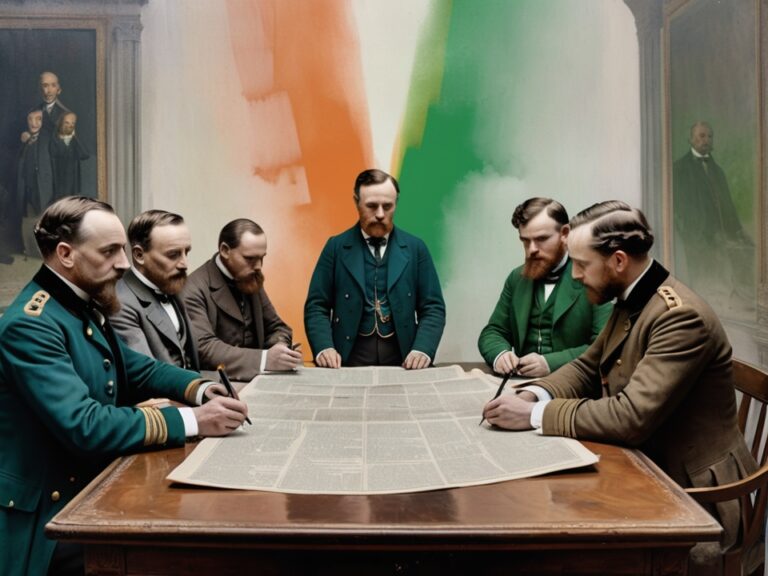
Iconic images define key moments in history such as DaVinci’s Last Supper. The iconic image of the seven signatories of the 1916 proclamation portrays the Irish Republican Brotherhoods defining role in Irish history.
The Irish Republican Brotherhood was founded in 1858 with the aim of establishing an independent democratic Irish republic. Following the failed 1848 rebellion and the arrest of many of its leaders James Stephens and John O’Mahony moved to Paris to avoid arrest. While supporting themselves there with teaching and translation work they planned to continue “the fight to overthrow British rule in Ireland”.
Three Tasks in Paris
During his seven years exiled in Paris Stephens set himself three tasks. They were,
- to keep Irelands struggle alive, 7
- to educate themselves with revolutionary knowledge, and
- to master the techniques of conspiracy.
Paris was then a hotbed of secret political societies. By joining one of the most powerful of these and learning the techniques of the “most profound masters of revolutionary science” of the time they learned the means of recruiting and combining people for the purposes of successful revolution. Thus the ideals of what was to become the IRB came into being.
Its principles were that the Irish people had the incontrovertible right to self-determination and national independence. The IRB nurtured and promoted the idea of equality and democracy for all.
Furious Democrats
Its founders unequivocally believed in republicanism defined by them as the “common people are the rightful rulers of their own destiny.” They identified themselves as “furious democrats in theory” and declared the movement to be “wholly and unequivocally democratic.” In the 19th century this was revolutionary and the IRB was denounced by the British establishment, the press, the Catholic Church and the Irish political elite like all Irish Republican and separatist movements.
Despite this the IRB flourished and became Ireland’s first mass democratic movements and one of the world’s leading democratic revolutionary movements. Between the 1879-81 land war and the 1st World War outbreak the IRB was a crucial player in the evolution and growth of modern Irish republicanism. It played a formative role in nurturing popular politicization in Ireland along republican lines.
Irish People Newspaper
In 1863 James Stephens decided a newspaper was necessary to inform, educate and provide a balance against the hostile establishment press. With financial aid from John O’Mahony and the Fenian Brotherhood in America the Irish People was set up. Its offices were at 12 Parliament Street just across from Dublin Castle. The Irish People’s first edition appeared on 28 November 1863. John O’Leary returned from London as editor with Charles Kickham, T C Luby and Denis Dowling Mulcahy as the editorial staff. O’Donovan Rossa and James O’Connor ran the papers business and the printer was John Haltigan. Stephens then departed on an American promotional and fund raising tour. Like the leaders of 1916 as well as being republicans those founding fathers of the IRB were the literary cream of Irish society.
The IRB continued to play a defining role in Irish history and relentlessly campaigned, organised, plotted and planned for Ireland’s independence from the United Kingdom and the establishment of an Irish Republic.
As part of the New Departure of the 1870’s–80’s, the IRB worked relentlessly to influence and democratise the Home Rule League which grew into the Irish Parliamentary Party. It was also involved in the Land War.
Twentieth century
As the 20th century dawned, the IRB was in decline. A new generation of Ulster Republicans set about changing this. In 1905 Denis McCullough and Bulmer Hobson founded the Dungannon Clubs and encouraged enlistment into the IRB rather than the British Army, with the goal of forming an Irish Republic. In 1908 Sean MacDiarmada and Hobson moved to Dublin and teamed with Tom Clarke. Clarke had served fifteen and a half years in Portland Prison and had recently returned from living in the United States to reorganise the IRB.
In 1909 a young Michael Collins was invited to join Sam Maguire. By 1914 the Supreme Council was reinvigorated by idealistic young men such as Hobson, McCullough, Patrick McCartan, John MacBride, Sean MacDiarmada, and Tom Clarke. The latter two were to become the primary instigators of the 1916 Easter Rising.
The IRB’s most glorious achievement was its decisive move in planning and staging the 1916 Easter Rising. Its leader’s execution changed Irish political opinion and landscape as expressed in the 1918 general election that led to the establishment of the first Dáil Éireann in 1919.
The British reacted by suppressing Dáil Éireann and Irish democracy. This fanned the flames of the Irish War of Independence that led to the ‘Anglo-Irish Treaty’ and the establishment of a British Dominion 26 county Irish Free State.
The apartheid 6 county statelet of Northern Ireland had already been pre-emptively created by the British thus dividing the country as it remains today. Finally a British backed Free State counter revolution euphemistically called the Irish Civil War led to the suppression of Republican armed opposition and completed the arrangement to achieve what the British couldn’t.
During those tragic events the IRB like all segments of Irish Society was divided and took no active part in them. Reports of the IRB demise in 1924 consists of Free State propaganda. What did take place was that those in the Republican side of the conflict took on a ‘wait and see’ role while those on the Free State side who still claimed to be members of the IRB but could not be, as they were in violation of its oath and constitution. Their breach of the IRB oath to defend the Republic automatically excluded them. They ignominiously dissolved their claim to IRB membership in 1924 claiming that was its demise.
The remaining members of the IRB adhering to their oath continued to hold irregular meetings and laid wreaths at commemorative events. It struggled on in that manner until recent times neither making any comments on nor playing any role in the 1950’s Border Campaign nor in the 30 years’ war in Northern Ireland. It reduced itself to laying wreaths and writing letters to 26 county politicians whom its constitution does not even recognise. It was time for a revival.
In 2011 with the centenary of 1916 fast approaching the IRB at its AGM in Hayes Hotel, Thurles appointed new members of the Executive and plans were put in place to reinvigorate the organisation. However this was a false dawn as the old guard simply ignored them and continued as if they didn’t exist.
This situation simmered until 2018 with all sorts of disruptive nonsense from the non elected controlling clique when the branches unanimously voted no confidence in this splinter of the old guard. In a set of pique at this together with the outgoing president Billy McGuire, they attempted a coup by demanding the standing down of the elected officers, members and branches and the disbandanment of the whole organisation. They were ignored as they had no standing or authority to do this.
The Executive then called the 2019 AGM as required by the constitution. The old guard and the outgoing President were invited but they failed to attend. The well attended AGM took place and a new Executive and a new President were elected. Since then new IRB branches have and are being formed. An updated set of amendments to the constitution is being finalised. A new Charter setting out who we are and what we represent has been drawn up and new initiatives are taking place to deal with the country’s sorry state.
Plans are being developed to deal with the banking crisis, wholesale evictions not seen since the 19th Century, an unprecedented housing crisis and migrants being housed ahead of Irish people waiting for years to be housed, The Gardaí are behaving more like the Mafia. The politicians are acting only in their own interest and are stuffing their wallets with your money. The out of control judiciary are totally ignoring the law as they do the bidding of the banks and vulture funds.
The IRB today
The Irish Republican Brotherhood is based upon the fundamental principles of the Irish people’s right to sovereignty, democracy and national integrity. A strong and vigorous IRB is needed now as much as ever before because only a united people can put things right.
The IRB is the oldest, and has been the leading and most influential Irish republican organisation at crucial times in our history and is well served to act as an umbrella or parent organisation for all members of our diverse republican family in this time of crisis.
They are invited to affiliate as equals within the IRB umbrella without compromising their position where they can together debate their validly held positions with their consensus aims of achieving their common objective. Both you and your Republican organisation are invited to join the IRB or join with the IRB now.
A defining moment
Iconic images define key moments in history such as DaVinci’s Last Supper. The iconic image of the seven signatories of the 1916 proclamation defines the Irish Republican Brotherhoods role in Irish history. Attempts to describe them as fanatics and terrorists by revisionists cannot be upheld. Without question they were intellectual cream of Irish society. No more illustrious or diverse a collection of Irish men have come together before or since.
From Joseph Plunkett scion of a land owning titled family with roots going back to the Vikings to James Connolly born of Irish working class parents in Edinburgh they were all great thinkers, visionaries, poets and writers. They had one common goal, the vision of a free and Gaelic Ireland that they ultimately gave their lives for.
They came together under the inspiration and invitation of Tom Clarke and Sean MacDiarmada while reorganising the IRB and they quickly percolated to the top as its cream, and as the saying goes ‘the rest is history’.
It was no coincidence that such illustrious IRB men should lead the 1916 Rising. From its inception in 1858 the IRB has always attracted noble and illustrious figures and visionaries into its ranks and it continues to do so. Their role is your role now
2025 Easter Message from the IRB
As we celebrate this season of renewal and hope on the IRBs 109th anniversary of 1916 we extend our warmest Easter greetings to all our members and Irish people everywhere. May this time inspire fresh perspectives, renewed commitment to the future of Ireland, and a continued dedication to a better future for all Irish People.
Catalpa rescue
The Catalpa rescue was the escape, on 17–19 April 1876, of six Irish Fenian prisoners from the Convict Establishment (now Fremantle Prison), a British penal colony in Western Australia. They were taken on the convict ship Hougoumont to Fremantle, Western Australia, arriving 9 January 1868. In 1869, pardons had been issued to many of the imprisoned Fenians. Another round of pardons was issued in 1871, after which only a small group of "military" Fenians remained in Western Australia's penal system.
The Catalpa under sail with escapees approaching in whaleboat
In 1874, prisoner James Wilson secretly sent a letter to New York City journalist John Devoy, who worked to organize a rescue. Using donations collected by Devoy from Irish-Americans, Fremantle escapee John Boyle O'Reilly, then living in Boston, purchased a merchant ship, Catalpa, and sailed her to international waters off Rockingham, Western Australia. On 17 April 1876 at 8:30 am, Wilson and five other Fenians working outside the prison walls, Thomas Darragh, Martin Hogan, Michael Harrington, Thomas Hassett, and Robert Cranston, boarded a whaleboat O'Reilly had dispatched, were taken aboard Catalpa, and escaped to New York.
Fenians and plans to escape
Catalpa

Undercover operatives

Escape and pursuit
Catalpa dropped anchor in inte
As they rowed to Catalpa, a fierce squall struck, breaking the whaleboat's mast. The storm lasted till dawn on 18 April and was so intense that Anthony later stated that he did not expect the small boat to survive. At 7 am, with the storm over, they again made for Catalpa but an hour later spotted the screw steamer Georgette, which had been commandeered by the colonial governor, making for the whaler. The men lay down in the whaleboat and it was not seen by Georgette. Georgette found
As the whaleboat again made for the ship, a police cutter with 30 to 40 armed men was spotted. The two boats raced to reach the Catalpa first, with the whaleboat winning, and the men climbing aboard as the police cutter passed by. The cutter turned, lingered briefly beside Catalpa, and then headed to shore.[
Saved by the US flag
Early on 19 April the refuelled and now armed Georgette returned and came alongside the whaler, demanding the surrender of the prisoners and attempting to herd the ship back into Australian waters. They fired a warning shot with a 12-pounder (5 kg) cannon that had been installed the night before. Ignoring the demand to surrender, Anthony hoisted and pointed towards the U.S. flag, warning that an attack on Catalpa would be considered an act of war against the U.S.,[1] and proceeded westward. This was well recognised by Captain O'Grady of Georgette, who had sailed out of New York, was friendly toward Anthony and had, on 1 April, unwittingly entertained him in the steamer's pilot house, closely briefing him on the coast between Fremantle and Rockingham.[4]: 120
Governor Robinson had ordered the police on Georgette not to create an incident outside territorial waters. After steaming around threateningly for about an hour, Georgette headed back to Fremantle and Catalpa slipped away into the Indian Ocean.[1]
Aftermath

Catalpa did her best to avoid the Royal Navy on her way back to the U.S. O'Reilly received the news of the escape on 6 June[14] and released the news to the press. The news sparked celebrations in the United States and Ireland and anger in Britain and Australia (although there was also sympathy for the cause within the Australian population).[15] Catalpa
On 1 December 1876, seven months after the escape, Georgette sank near Busselton.[17]
George Smith Anthony remained in New Bedford with his wife and children, never returning to sea. He was appointed New Bedford Port Inspector in 1886. With the help of a journalist, Z. W. Pease, he published an account of his journey, The Catalpa
Thomas Desmond went on to become Sheriff of San Francisco from 1880 to 1881[19]
John Breslin returned as a hero. He continued contact with the Clan na Gael and Devoy, and died in 1887.[20]
Catalpa was presented to Captain Anthony, John Richardson and Henry Hathaway in lieu of payment.[7]: 89 She was eventually sold and turned into a coal barge. Not of great value in this capacity, Catalpa was finally condemned at the port of Belize, British Honduras.[21]
Mythologising
The story of Catalpa's escape grew more dramatic in each retelling. After the first mate declined to allow the police to board the ship, he wrote in the ship's log:[7]: 86
At 8 Am the Steam Ship Georgette hailed me and her captian [sic] asked me if I had seen a boat with a lot of men in it—I told him no. Another man asked me if the Captian was on board—I told him no. Asked if I had any strangers on board—I told him no. Then asked if he might come on board—I told him no. The steamer then left me and I stood on my course.
In the version of the tale told by Anthony (who was not a witness), it became:[4]: 155
The captain of the English steamer asked where the boat was which was missing from the cranes... "I don't know anything about it," said Mr. Smith. "Can I come aboard?" asked the officer. "Not by a damned sight," was Mr. Smith's reply.
In The Emerald Whaler (1960) by William Laubenstein, a fictionalised version, the encounter became much more confrontational:[7]: 86
This is Her Majesty's ship of war Georgette... "Hell of a lookin' warship," Sam jibed. "What's yer guns?" ... "What is your business?" ... "I'm on th' high seas, as any fool can see," Sam countered ... "Your larboard boat is missing" ... "Captain has it" ... "I am going to board your ship!" ... "Like hell you are! You try it an' you'll be goddamned good and sorry! ... What the hell did we lick the pants offn' you damn Britishers in 1812 about? ... You don't own the goddamn ocean!"
In addition, over the years, Georgette was presented as bigger and larger than it actually was: roughly the same size as Catalpa, and outfitted with a single cannon. In Thomas Keneally's The Great Shame and the Triumph of the Irish in the English-Speaking World (1999), she is described as the Royal Navy's newest ship and being twice the size of Catalpa.[7]: 86
Memorials
edit
On 9 September 2005 a memorial was unveiled in Rockingham to commemorate the escape. The memorial, a large statue of six wild geese, was created by Western Australian artists Charlie Smith and Joan Walsh Smith. The geese refer to the phrase "The Wild Geese" which was a name given to Irish soldiers who served in European armies after being exiled from Ireland. The Fenians transported to Western Australia adopted the phrase for themselves during their voyage on board Hougoumont, even publishing a shipboard newspaper entitled The Wild Goose.[22]
In 1976 a memorial stone was erected in New Bedford, Massachusetts, to commemorate the 100th anniversary of the rescue. New Bedford was the home port of Catalpa.[23]
Exhibition
From 22 September 2006 to 3 December 2006 an exhibition, called "Escape: Fremantle to Freedom," opened at Fremantle Prison displaying many artefacts relating to the Catalpa rescue. The exhibition received over 20,000 visitors.
The National Museum of Ireland put on an exhibition in Collins Barracks between 18 and 19 April 2026 called "Catalpa 150; The Catalpa Fenian Rescue, 17th to 19th April 1876" to commemorate the 150 year anniversary of the rescue. The exhibition displayed the U.S. flag that was raised during the stand-off between the Catalpa and the Georgette.[24]
-
 Martin Hogan (1833–1901)
 -
 Thomas Hassett (1841–1893)
 -
 James Wilson (1836–1921)
 -
 Michael Harrington (1825–1886)
 -
 Thomas Darragh (1834–1912)
 -
 Robert Cranston (1842–1914)
 -
 John Boyle O'Reilly (1844–1890)


In popular culture
editSo come all you screw warders and jailers
Remember Perth regatta day
Take care of the rest of your Fenians
Or the Yankees will steal them away.
On the seventeenth of April last the Stars and Stripes did fly
On board the bark Catalpa, waving proudly to the sky;
She showed the green above the red as she did calmly lay
Prepared to take the Fenian boys in safety o'er the sea.

- Musician and local historian Brendan Woods authored a theatrical production about the breakout titled The Catalpa directed by Gerry Atkinson with a cast of 22. On 15 November 2006 The Catalpa premiered at the Fremantle Town Hall and ran until 25 November. The play was based on the diaries of Denis Cashman, with the poetry of John Boyle O'Reilly set to music and dance supported by a five-part Musical ensemble. The show sold out on three of its four night run.[25]
- Irish rebel music band The Wolfe Tones recorded a song about the Catalpa incident called The Fenians' Escape.
- The Real McKenzies, a Celtic punk band from British Columbia, Canada, included their rendition of the song "The Catalpa" on the 2005 Fat Wreck Chords album "10,000 Shots".
- Donal O'Kelly's one man play Catalpa was an international success, winning a Scotsman Fringe First Award at the 1996 Edinburgh Festival Fringe and the Critic's Prize at the Melbourne International Festival in 1997.[26]
- Western Australian folk music band, The Settlers released the album Bound For Western Australia in 1978 that included the song The Catalpa[27]
- Australian folk band, The Bushwackers featured the song The Catalpa on the album Beneath the Southern Cross.[28]
- An Australian Broadcasting Corporation production, The Catalpa Rescue, was shown on ABC Television on 25 October 2007.[29]
- Fenian Park, Catalpa Park and O'Reilly Park, in Glen Iris, Bunbury.
- In 2021 a new GAA team was founded in the Rockingham Area to compete in the GAAWA competitions called Na Fianna Catalpa
See also
editReferences
edit- Jump up to: Reid, Richard (17 March 2011). "'A noble whale ship and commander'—The Catalpa rescue, April 1876" (PDF). Not Just Ned: A true history of the Irish in Australia. National Museum of Australia. Archived (PDF) from the original on 10 October 2015. Retrieved 15 February 2016.
- "Hougoumont – arrived in WA in 1868". Convicts to Australia. Perth, WA: Perth Dead Persons' Society. Archived from the original on 29 February 2016. Retrieved 15 February 2016.
- Birman, Wendy (1974). "O'Reilly, John Boyle (1844–1890)". Australian Dictionary of Biography. Melbourne University Press. Archived from the original on 30 January 2016. Retrieved 15 February 2016.
- Jump up to: Pease, Zephaniah Walter (1897). "The Catalpa
expedition". New Bedford, MA: George S. Anthony. Retrieved 19 July 2020.[non-primary source needed] - Fennell (2005), p. 88: "...the ship was originally built as a freighter in 1844 by Waterman and Elwell of Medford, Massachusetts. She was converted to a whaler in 1852 and continued in that use until 1871, when she reverted to a cargo vessel owing to the decline of the whaling industry. When purchased by the clan in 1875, the Catalpa required a significant amount of work and money to again be fitted as a whaler." [This work is described in detail by Pease at pp. 77–78]
- 1634–1699: McCusker, J. J. (1997). How Much Is That in Real Money? A Historical Price Index for Use as a Deflator of Money Values in the Economy of the United States: Addenda et Corrigenda (PDF). American Antiquarian Society. 1700–1799: McCusker, J. J. (1992). How Much Is That in Real Money? A Historical Price Index for Use as a Deflator of Money Values in the Economy of the United States (PDF). American Antiquarian Society. 1800–present: Federal Reserve Bank of Minneapolis. "Consumer Price Index (estimate) 1800–". Retrieved 29 February 2024.
- Jump up to: Fennell, Philip A. (2005). "History into Myth: The "Catalpa's" Long Voyage". New Hibernia Review / Iris Éireannach Nua. 9 (1): 77–94. doi:10.
1353/nhr.2005.0022. JSTOR 2055 7987. S2CID 144608525. - Lefroy, Mike and Joy (2006). Catalpa Escape. Fremantle Press.[page needed]
- "FS 5". fremantlestuff.info. Archi
ved from the original on 3 July 2018. Retrieved 3 July 2018. - "Shipping Report". Herald (Fremantle, WA : 1867–1886). 8 April 1876. p. 2. Archived from the original on 23 September 2021. Retrieved 3 July 2018.
- "FREMANTLE—PORT TOPICS". Western Australian Times. 21 April 1876. Retrieved 15 July 2023.
- "The King's Pardon". The West Australian. No. 6, 143. Western Australia. 24 November 1905. p. 7. Archived from the original on 23 September 2021. Retrieved 5 August 2020 – via National Library of Australia.
- "Bell Cottage (ruin), Rockingham Assessment Documentation". inherit.
stateheritage.wa.gov.au. State Register of Heritage Places. Archived from the original on 13 March 2019. Retrieved 10 May 2020. - Stevens, Peter (2003). The Voyage of the Catalpa. p. 352.
- "THE OWL AND MAGPIE". Western Australian Times. 21 April 1876. Retrieved 15 July 2023.
- King, Gilbert (12 March 2013). "The Most Audacious Australian Prison Break of 1876". Smithsonian.com. Washington, DC: Smithsonian Institution. Archived from the original on 23 August 2016. Retrieved 22 August 2016.
- "The Isaacs Family". Margaret River and Districts Historical Society. Retrieved 5 November 2021. in Jennings, Guy (2013). Margaret River Stories: 1913–2013. Margaret River and Districts Historical Society. ISBN 9780646575346.
- Fennell, Philip; King, Marie; Golway, Terry (2008). John Devoy's Catalpa Expedition. New York: NYU Press. p. 172. ISBN 9780814727744. Ar
chived from the original on 27 July 2020. Retrieved 22 August 2016. - "Sheriff Tom Desmond, Irish Republican Hero | History of the San Francisco Sheriff's Department". www.sfsdhistory.
com. Archived from the original on 27 September 2018. Retrieved 3 July 2018. - "John James Breslin (1833–1887)". feniangraves.net
. Archived from the original on 3 July 2018. Retrieved 3 July 2018. - Laws, John; Stewart, Christopher (2007). It Doesn't End There. Macmillan. p. 166. ISBN 9781742625645. Ar
chived from the original on 27 July 2020. Retrieved 15 February 2016. - Fitzgerald, G. P (1968), The Wild goose : lost Fenian-Australian document is found, archived from the original on 23 September 2021, retrieved 22 December 2019
- "Friendly Sons of Saint Patrick". New Bedford, MA. 1976. Archived from the original on 23 February 2016. Retrieved 16 February 2016.
- "Catalpa 150 | Decorative Arts & History". National Museum of Ireland. Retrieved 17 April 2026.
- Catalpa Productions
- White, Victoria (24 August 1996). "Irish actor's one man show gets Fringe First award". Irish Times. Archived from the original on 17 April 2021. Retrieved 12 February 2020.
- "The Settlers – Bound For Western Australia". Discogs. 1978. Archived from the original on 12 August 2016. Retrieved 18 February 2016.
- "The Bushwackers – Beneath The Southern Cross". Discogs. 1981. Archived from the original on 7 May 2016. Retrieved 18 February 2016.
- Gallacher, Lyn (28 July 2013). "The Catalpa escape". Hindsight. Australian Broadcasting Corporation. Archived from the original on 1 April 2016. Retrieved 18 February 2016
